
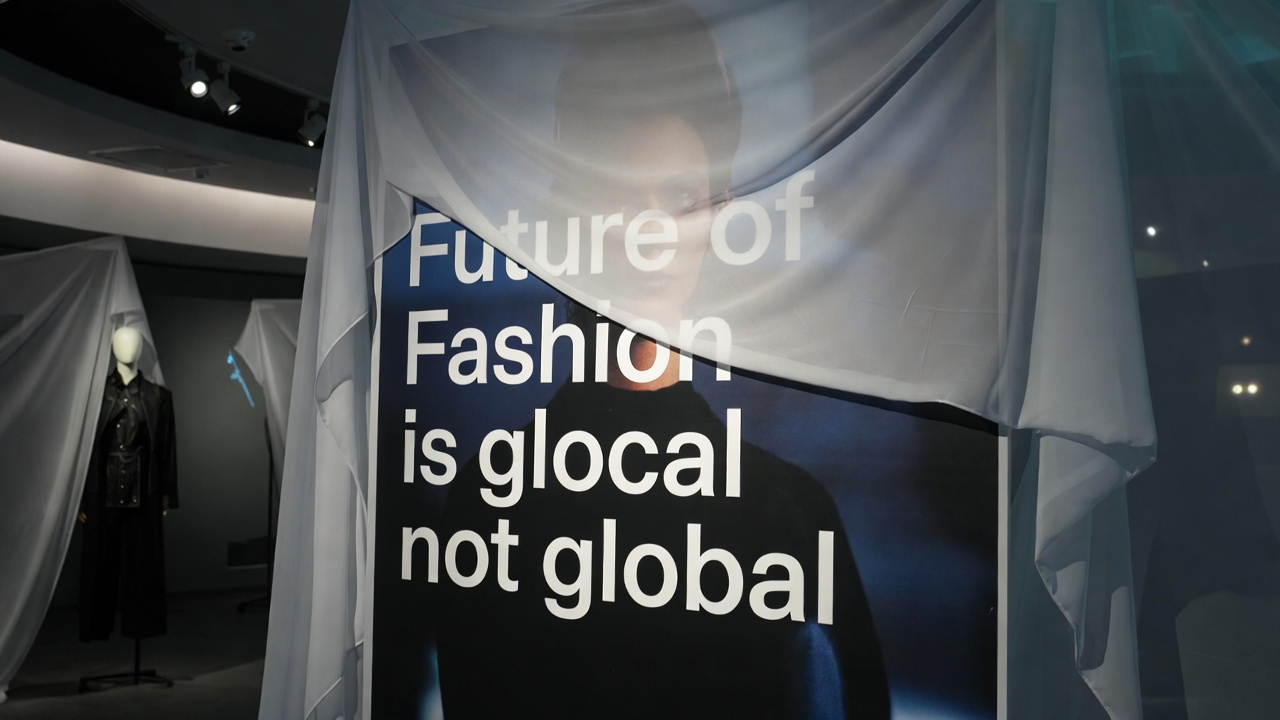
We at F-trend have been analyzing the fashion industry for years now using our P2VP framework, and we keep coming to the same conclusion. We predict that by 2028, Western fashion dominance is going to collapse—not decline gradually, but actually collapse. Many big brands will close their stores due to not focusing on regional trends. And this is where, as a brand owner, retail executive, or fashion professional, you should be really worried.
You may be thinking why we at F-trend are so certain about this timeline. So let us share our key insights based on the F-trend P²VP methodology (Personality + Purpose + Value = Product), which has achieved 98% accuracy in forecasting.
The Hidden Foundation: Why Western Fashion Really Dominated
Here's an uncomfortable truth that the fashion industry rarely discusses openly. Western fashion dominance was never primarily about having superior design or more creative vision. It was fundamentally about having access to unlimited cheap money through the dollar's reserve currency status.
You see, for decades, the US could print dollars, buy imports from everywhere, and those dollars would just cycle back through Treasury purchases. This "exorbitant privilege" meant Western brands could access capital at roughly 1% interest rates. They could fund massive global marketing campaigns and create this entire expensive infrastructure of cultural influence—fashion weeks, magazines, influencer systems, fashion education institutions, all of it.
That infrastructure is what convinced the world that Western style was aspirational. But here's what you need to understand: that system is breaking down right now, as we speak.
The change in the next two years is projected to be faster than the last decade due to several interacting factors:
- Weaponization of the Dollar: The use of sanctions against Russia has given all nations a powerful incentive to find alternatives, moving from a theoretical consideration to an active, real-world strategy.
- Mounting Debt and Interest Costs: The US government now pays more in interest on its national debt than on its national defense. This escalating fiscal burden puts immense pressure on US interest rates. If foreign investors like China and India divest from US Treasuries due to conflict, yields would rise sharply (J.P. Morgan estimates a 33 basis point rise for every 1% decline in foreign holdings), drastically limiting the government's ability to borrow and spend.
- BRICS and the Parallel System: The development of a parallel financial infrastructure (BRICS Pay) and the shift to local currency trade in the massive energy sector provide viable, functioning alternatives for the first time.
- Conflict as a Catalyst: The user's hypothetical scenario of a US conflict with China and India would force an immediate, sharp acceleration of these trends. These nations would likely divest from US assets and switch to local currencies and gold reserves en masse, making a rapid decline in US monetary flexibility by the end of 2028 a real possibility.
Also Payment systems like UPI-TIPS linkage if goes live and scales by 2027, and China/India continue to settle energy trade in local currencies, the US loses two massive sources of artificial demand for the dollar: Energy and Euro-Asian Trade.
The current geopolitical landscape suggests a significant departure from the stable, gradual erosion of the past, moving towards a potentially rapid and disruptive shift in the global financial order.
The Money Printer Is Jamming: Evidence You Can Verify Today
If you're skeptical, we encourage you to look at what's actually happening. India and China are systematically dumping US Treasury bonds and buying gold instead. This isn't political theater—they're preparing for a post-dollar world.
Once fewer countries need dollars for international trade and fewer are buying US Treasuries, America can't print without facing serious consequences anymore. Our analysis shows that by 2028, the US could face a 40% reduction in its monetary flexibility. That's not a gradual slope—that's falling off a cliff.
You want more proof? Look at President Trump pulling out of NATO, the UN, and over 50 international organizations. Western analysts frame this as ideology, but we see it as fiscal reality. When a hegemon can't even afford to fund military alliances and diplomatic institutions, how will it fund the expensive machinery of making the world think its fashion is cool?
The entire fashion industry is built on a foundation that's turning to dust. And if you're running a Western fashion brand or retail operation, you need to understand this immediately.
Why Your Traditional Fashion Forecasting Is Failing You
You've probably noticed that traditional fashion forecasting keeps getting things wrong lately. There's a reason for that. Most forecasters analyze past runway shows, track historical trends, interview designers, and then just extend those lines forward. This approach worked fine when the underlying economic structure remained stable.
But when the foundation itself is transforming? That approach is worse than useless—it's actively misleading you.
This is where our P2VP framework differs fundamentally. We track what people actually do based on their real economic situation, not what they say they'll do or what trends suggest they should do.
Here's the key insight we want you to understand: culture and economy don't move separately with some time lag between them. They move together. Right now. In parallel.
Think about your own life for a moment. If you suddenly lost your job tomorrow, would you wait five years before changing your spending habits? Of course not. You'd change them immediately. The same works in reverse—if your salary suddenly doubled, you wouldn't wait a decade before feeling more confident about spending.
Personality reflects cultural confidence. When your country is economically rising, you feel confident about your culture. When it's declining, you get defensive or nihilistic.
Purpose captures what you actually need based on material conditions. Struggling consumers need value and essentials. Comfortable consumers want aspiration and identity expression.
Value combines what you can afford with what you think is worth it. And this changes instantly when your economic situation changes.
This framework explains something that's probably puzzling you right now: why Western fashion brands are already struggling in India despite India's economy booming.
The Data That Should Alarm Every Fashion Executive
Let us show you some cold, hard sales data that validates our P2VP predictions. Zara India saw just 0.4% sales growth in FY25—essentially flat. Meanwhile, India's economy is growing at 6-7% annually. At the same time, Zara's home market of Spain—where the economy is struggling—showed strong performance. Across the Americas and Asia overall, Zara's turnover actually declined in the first half of 2025.
H&M shows the exact same pattern. Stagnating in India and the US. Doing relatively better in European home markets.
Now, if you're using traditional retail logic, this makes absolutely no sense. India should be a growth rocket right now—rising middle class, young population, increasing urbanization, growing fashion awareness.
But here's what our P2VP framework reveals: Indian consumers now have both purchasing power AND cultural confidence. They're not thinking "I need to dress like a Westerner to look successful" anymore. They're thinking "I have money now, and I want something that reflects who I am."
So they're buying Indian brands that understand their aesthetics, fit their body types, work for their climate, and don't come with the psychological burden of imitating someone else's culture.
Ask yourself this question: Why would a rising Indian professional want to copy the style of a civilization that's clearly in decline?
Meanwhile, Spain's strong Zara numbers? That's not success—that's people in a struggling economy buying familiar, affordable brands because they're anxious about the future. It's defensive consumption, not confident luxury spending.
This pattern isn't specific to Zara and H&M. This is structural. And if you're in the Western fashion business, you need to understand that your entire business model is breaking because its fundamental assumptions are evaporating.
The Expensive Truth About Cultural Influence

We need to share something with you that might change how you think about fashion entirely. You know how we all like to think of cultural influence as this organic, creative thing that flows naturally from artistic genius? That's mostly a romantic myth.
Cultural influence is expensive to manufacture and maintain. Really expensive.
To build fashion dominance, you need massive advertising budgets sustained for decades, global retail infrastructure, fashion media and magazines, PR agencies, influencer ecosystems, fashion schools teaching your aesthetic as "correct," fashion weeks and industry events, constant content creation across every platform.
The US dollar being the reserve currency meant America and its allies could fund all this at a scale nobody else could match. But there's also a psychological mechanism at work that you need to understand.
Humans are practical creatures. We don't usually romanticize or try to copy cultures that are obviously struggling economically. It's not meanness—it's pattern recognition. In the 1980s, when Japan's economy was booming, Japanese aesthetics became globally influential. When Japan's economy stagnated in the 1990s, that cultural influence just stopped. Like turning off a tap.
Economic success makes people think "whatever they're doing works, maybe I should pay attention." Economic failure makes people think the opposite.
So right now, as Eastern economies boom and Western economies face inflation, debt crises, and declining living standards, the psychology is flipping. And you're seeing it in your sales data already, even if you haven't connected the dots yet.
Europe's Self-Inflicted Wound That Accelerated Everything
If you're operating in European markets, you need to understand how the Ukraine war accelerated Western decline dramatically. It was a massive strategic miscalculation that drained European resources, exposed energy vulnerabilities, and showed everyone that Europe couldn't sustain a real industrial conflict.
The costs have been brutal for your business environment: energy prices spiking, defense budgets expanding, supporting millions of refugees, general economic disruption. But there's another dimension that directly kills your fashion influence: internal fragmentation.
France, the UK, Germany—these markets are facing serious cultural tensions between native populations and immigrant communities, especially Muslim immigrants. You've got native populations getting defensive about their heritage and identity. This burns resources through security costs, creates political paralysis, causes capital flight, and triggers brain drain.
More importantly for your business: you can't project a coherent cultural narrative when your own society is fighting over basic identity questions. How can "French fashion" be globally influential when France can't even agree on what being French means?
Meanwhile, look at China, India, the Gulf states. They have cultural confidence because their economies are rising. That confidence translates directly into fashion: bold assertion of traditional aesthetics, innovative fusions from positions of strength, not desperate preservation of fading glory.
The Family Structure Revolution You're Missing
Here's something that's going to transform your entire market, and most Western analysts are completely missing it. The whole Western push for radical individualism and nuclear families? That wasn't about liberation. It was about economics—specifically, about selling more products.
Think about it from a pure business perspective. You take a traditional extended family of eight people living together and fragment it into four separate couples in four separate apartments. What just happened to your market size?
You just quadrupled real estate demand. Four mortgages instead of one. Four refrigerators, four washing machines, four TVs, four of everything. Four separate insurance policies. Nobody's cooking for the extended family, so massive increase in fast food and convenience products.
And fashion? This was the goldmine. Forget about hand-me-downs or sharing clothes across generations. Everyone needs their own wardrobe, and since you're living separately, you need to constantly buy new things to keep up with seasonal trends.
The "strong, independent woman" narrative fit perfectly into this consumption model. Dual-income households could afford higher rents and mortgages. Two incomes meant two professional wardrobes, two cars, double consumption of everything. The fashion industry loved it because seasonal fashion makes no economic sense if you're sharing clothes across generations in an extended family.
But here's what you need to understand for your business planning: this model only worked under dollar hegemony. It required easy credit, cheap mortgages, rising wages, confidence in the future, and massive advertising budgets to keep pushing the message that individualism equals success.
Now that dollar power is declining and Western economies face real constraints, this entire social structure is collapsing. Young people in the West can't afford to live alone anymore. Multi-generational living is returning out of necessity, not choice.
Meanwhile, Eastern societies that maintained extended family structures? They have a structural advantage now. Extended families provide economic resilience through shared resources, built-in support systems, intergenerational wealth transfer that lets families build capital faster, and much lower per-person consumption needs.
This has massive implications for your fashion business. Eastern consumers don't need to replace their entire wardrobe every season to signal status. Their status comes from family position and real economic substance. They can invest in quality pieces, heritage garments that get passed down, traditional clothes that carry meaning across generations.
Fashion in these markets becomes about cultural expression and genuine quality, not disposable trend-chasing. And as Western economies keep contracting, you're going to see the cultural messaging flip from "independence is strength" to "unity is strength."
If you're designing for or selling to Western markets, you need to anticipate this shift: more versatile pieces, emphasis on durability, return of traditional garments, less artificial seasonal obsolescence. The very social fragmentation that drove your Western fashion consumption for decades is reversing.
2028: When Multiple Crises Converge on Your Business
By 2028, you're going to experience multiple crises hitting your business simultaneously. Let us walk you through what we see coming:
Fiscal Constraints Hit Hard: The US can't print its way out of problems anymore. With 40% less monetary flexibility, there are no bailouts for struggling fashion companies. If you've been relying on cheap capital and occasional government support during crises, you're about to face actual market discipline for the first time.
Your Western Consumer Base Goes Broke: Real incomes are falling across Western markets. When you have societies with $80,000 GDP per capita but homelessness is rising, something fundamental has broken. Your customers are shifting from desire-based consumption (that $120 dress purchased for identity and Instagram) to necessity-based consumption (the $4 basics because that's all they can afford).
Desire-based consumption—which is what luxury and premium fashion depend on—requires three things: disposable income, confidence in the future, and marketing that makes products feel necessary for identity. All three are disappearing in Western markets.
Your Global Market Fragments: Without American hegemony enforcing convergence on Western norms, regional preferences are exploding in different directions. What works in Madrid doesn't work in Mumbai. What sells in New York doesn't sell in Jakarta. The whole idea of one unified global market—which your fast fashion economies of scale depend on—is dying.
If you're operating on a model where you design centrally and push the same products globally, your business model is becoming obsolete in real-time.
Your Narrative Infrastructure Fails: You can't afford to fund your marketing apparatus anymore. Meanwhile, Eastern brands backed by productive economies and cheap capital in their own currencies can outspend you ten-to-one in their home regions. The narrative is flipping, and you're losing the ability to shape it.
Generational Replacement Completes: A ten-year-old child in India right now becomes a twenty-year-old consumer in 2036. That child is growing up watching their country rise, consuming content on Indian platforms (not Instagram or TikTok controlled by the West), and seeing Indian brands as aspirational. Their psychology is completely different from previous generations who grew up during Western dominance.
This isn't gradual adoption. It's a hard generational replacement where one worldview is replaced by another. And you cannot market your way out of this—their fundamental reference frame is different.
Your Three Options (None of Them Good)
If you're running a Western fashion brand or retail operation, you basically have three paths forward, and we need to be honest with you—none of them offer genuine prosperity:
Option One: Regionalization. You could create different designs and marketing for each major region, abandoning your unified global approach. But this destroys your core competitive advantage: economies of scale. If you're a brand like Zara or H&M, you succeed by producing massive volumes of standardized designs with centralized control. Regional customization means smaller production runs, higher costs, and direct competition with local brands who understand their markets intimately. This path leads to slow margin compression and market share erosion.
Option Two: Retreat to Home Markets. You could accept decline in emerging markets and refocus entirely on Western consumers. But these markets are contracting economically and demographically. You'd be competing for share of a shrinking pie against equally desperate competitors. This means price wars, margin destruction, and eventual consolidation. You might survive, but you won't prosper.
Option Three: Acquisition or Partnership. You could sell to or partner with Eastern conglomerates, essentially becoming distribution channels for Eastern fashion capital. Your brand name might survive, but not on your terms. Eastern owners will orient the brand toward Eastern consumers, hire Eastern designers, and gradually transform the aesthetic until your "heritage" becomes just marketing copy rather than reality.
Our analysis suggests most Western brands will experience all three simultaneously over the next decade: attempt regionalization and burn capital in the process, retreat and slowly fade, and eventually the stronger brand names get acquired by Eastern capital purchasing Western heritage as trophies.
By 2035, brands like Zara and H&M will either have exited the Indian market entirely or exist as shadows of their current scale, operating at losses, maintained only for political reasons. The economics simply won't work.
Who's Rising While You're Declining
While you're struggling with these challenges, regional champions are emerging—brands you probably don't know yet, but that are dominating their home markets with increasing confidence.
These brands have structural advantages that compound over time:
- Cultural authenticity and deep local knowledge you can't replicate
- Understanding of regional body types, climates, and occasions
- Access to capital from growing home economies at reasonable rates
- Distribution through local e-commerce platforms independent of Western infrastructure
- Marketing through local social media, local influencers, local cultural touchpoints
- Price positioning matching local purchasing power curves
- No psychological burden of being "foreign" or requiring explanation
In India, domestic brands are capturing market share from Western fast fashion at accelerating rates. In China, local brands dominate despite decades of your international competition. Southeast Asia, the Middle East, Africa, Latin America—each region is developing complete fashion ecosystems funded by their own economic surplus, distributed through their own platforms, marketed through their own media.
By 2028, the global fashion landscape will be genuinely multipolar: Shanghai, Mumbai, Dubai, São Paulo, Lagos, Jakarta—each a center of regional fashion production and consumption, with its own aesthetic logic, trend cycles, and distribution networks.
Your Western fashion weeks will still exist, but primarily for your own contracting markets. Think of it like the British royal family—ceremonial heritage with declining actual relevance.
The Cultural Confidence Gap That's Killing Your Brand
There's a psychological dimension accelerating everything that you need to understand for your business strategy. When people's economy is growing, their society is stable, and their future looks bright, they don't feel the need to copy others. They innovate from their own traditions. They take pride in their distinctive aesthetic. They view their heritage as richness rather than backwardness.
Eastern consumers increasingly exhibit this psychology. A young professional in Mumbai doesn't think "I need to dress like someone in New York to signal success." They think "I can afford quality now, and I want something that reflects who I am."
Conversely, your Western consumers facing economic decline exhibit defensive psychology. Either aggressive cultural protectionism—defending "heritage" against perceived threats—or nihilistic consumption—buying cheap disposables because planning long-term feels pointless.
Neither psychology supports sustained luxury fashion consumption or confident cultural innovation. Fashion requires either comfortable surplus (spending on quality and aspiration) or confident identity (expressing cultural self-assurance). Eastern societies increasingly have both. Your Western markets are losing both.
If you're building a brand strategy that assumes your Western heritage gives you prestige in Eastern markets, you need to rethink that assumption immediately. A twenty-year-old in Mumbai in 2028 has no emotional connection to your Paris fashion house if they grew up during a period of Western decline and Eastern rise.
The Spiritual Exception (The One Bright Spot)
Before we conclude, we should mention one significant exception to the rule that cultural influence requires economic validation: spirituality.
You've probably noticed that people turn to Buddhist philosophy, Sufi poetry, Indian meditation practices, and various wisdom traditions regardless of those regions' current economic status—sometimes especially when seeking alternatives to materialist consumption that failed to deliver meaning.
Spiritual influence operates on different logic than commercial culture because it addresses existential questions that wealth doesn't solve. In fact, spiritual traditions often gain influence after societies experience over-consumption and seek deeper purpose.
The irony here is that as Western societies experience economic decline and the emptiness of consumption-based identity, they may increasingly look East for spiritual frameworks, even as they lose economic and commercial influence in fashion and lifestyle products.
You might end up importing Eastern wisdom while trying to export your obsolete fashion inventory—a reversal that would have seemed impossible twenty years ago.
What You Should Do Right Now
For those of you building careers or businesses in fashion, here's what our analysis suggests you should consider:
If you're a forecaster: Abandon trend-chasing and embrace structural analysis. Your ability to read macroeconomic indicators, understand demographic shifts, and analyze regional psychology matters more than your knowledge of runway shows. The skills that made you successful for the past decade won't serve you for the next one.
If you're a designer: Carefully consider which markets you're designing for. Building a career around Western markets means accepting a shrinking opportunity set with declining resources. If you can authentically engage with Eastern aesthetics—or better yet, if you're from those regions—you face growing opportunities. But authenticity matters. Western designers superficially incorporating Eastern elements will be competing against designers who actually live those cultures.
If you're a retailer: You face impossible choices between economies of scale requiring cultural uniformity, and regional customization that markets increasingly demand. The business models that worked for decades don't function in fragmenting markets. Your survival requires accepting lower margins, smaller scale, or complete business model transformation. Start planning for this now, not when the crisis hits.
If you're an investor: Ask hard questions about Western fashion brands' long-term viability, especially those dependent on growth in emerging markets that are showing declining interest in Western aesthetics. The smart money is already rotating toward regional champions in growing markets, not heritage brands in declining ones.
If you're a brand owner: Recognize that your heritage and historical prestige matter less when your target consumers didn't grow up venerating that history. Brand equity you built over a century can evaporate in a decade when the fundamental psychology shifts. You need contingency plans now.
Our Final Assessment
By 2028, the question won't be whether Western fashion maintains global influence. The question will be whether it maintains relevance even in home markets facing economic stress, cultural fragmentation, and population decline.
The dollar system that funded Western cultural dominance is fracturing. The consumers in emerging markets who once aspired to Western lifestyles now have the confidence and means to define their own aesthetics. The internal contradictions within Western societies—economic stress, cultural battles, political paralysis—prevent you from projecting coherent cultural narratives. And the social fragmentation that drove Western consumption is reversing as economic necessity forces return to extended family structures and resource sharing.
Fashion follows money. Money follows economic productivity. Economic productivity is shifting East. Therefore, fashion influence is shifting East.
The logic is simple, even if the implications are uncomfortable for those of you who built careers on Western fashion dominance. The parallel movement of culture and economy means this shift is happening now, not in some distant future. You can see it in the sales data from Zara and H&M in India versus Spain. The story is clear for those willing to see it.
By the time most Western fashion executives fully acknowledge this reality, the transformation will be complete. The future of fashion is local, regional, multipolar—and funded by whoever has economic surplus to create desire and cultural confidence to assert identity.
And in 2028 and beyond, that won't be the West.
That's not pessimism or bias. That's our P2VP framework following the economic mathematics to their logical conclusion. We encourage you to verify our analysis with the data that's already available. The evidence is there if you're willing to look.
At F-trend, we believe in preparing for the future that's actually coming, not the one we wish was coming. We hope this analysis helps you make better strategic decisions for your fashion business, brand, or career.