
- Where
- Fashion Forecast → Narrative intelligence and Designer campaigns tabs
- Steps
- 4
- Time
- About 5 min
Step 1: Read creator-led narratives
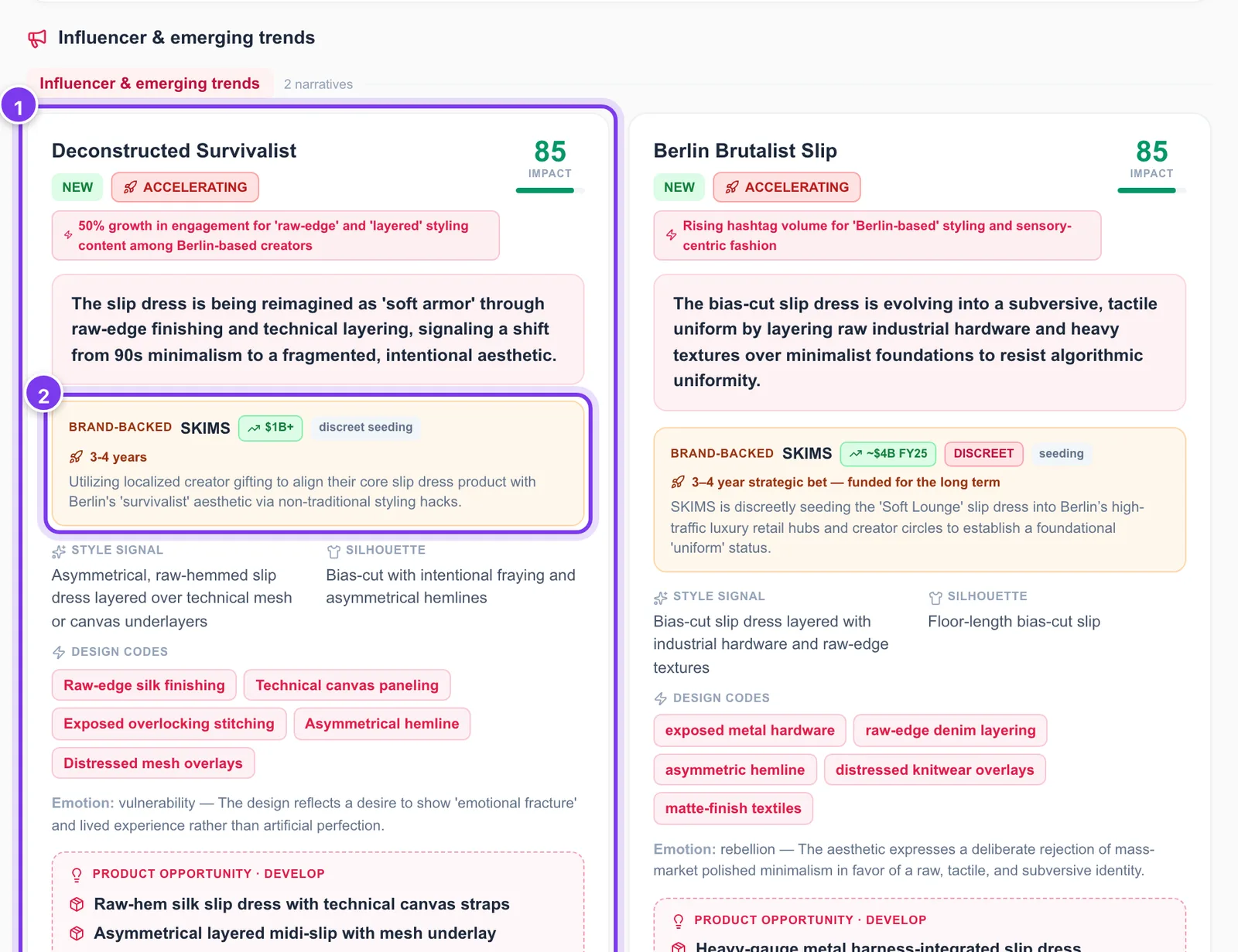
Influencer & emerging trend cards such as Deconstructed Survivalist, marked new and accelerating, with a brand-backed panel. Each narrative card shows its stage, the growth evidence behind it and the narrative in one line. Where a brand is quietly funding the push, a Brand-backed panel names it and how long it has been building — so a paid push is not mistaken for organic demand. Style signal, silhouette, design codes and product opportunities follow.
- Narrative card — what the narrative is and the growth evidence behind it.
- Brand-backed — the brand funding the narrative and how long it has been building.
Step 2: Check viral film and screen
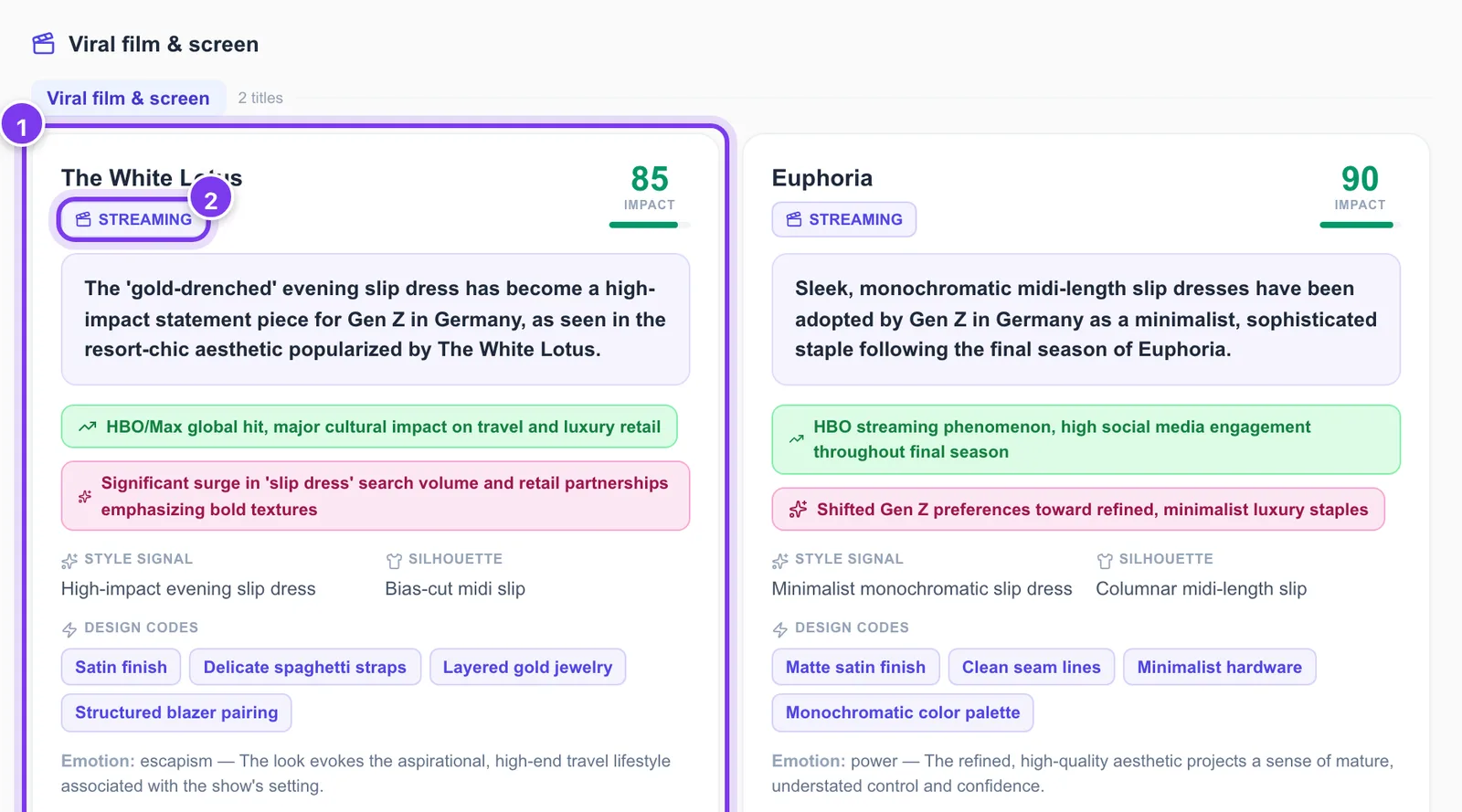
Viral film & screen cards for two streaming series, each with an impact score, the look it spread and its design codes. Viral film & screen picks out titles crossing over into fashion in your market, gated on both audience reach and fashion take-up. Each card says what the look is, the evidence it is spreading, and the style signal, silhouette and design codes it implies.
- Screen card — the title, its impact score and the look it is spreading.
- Format — streaming, cinema and so on.
Step 3: Read the campaign synthesis
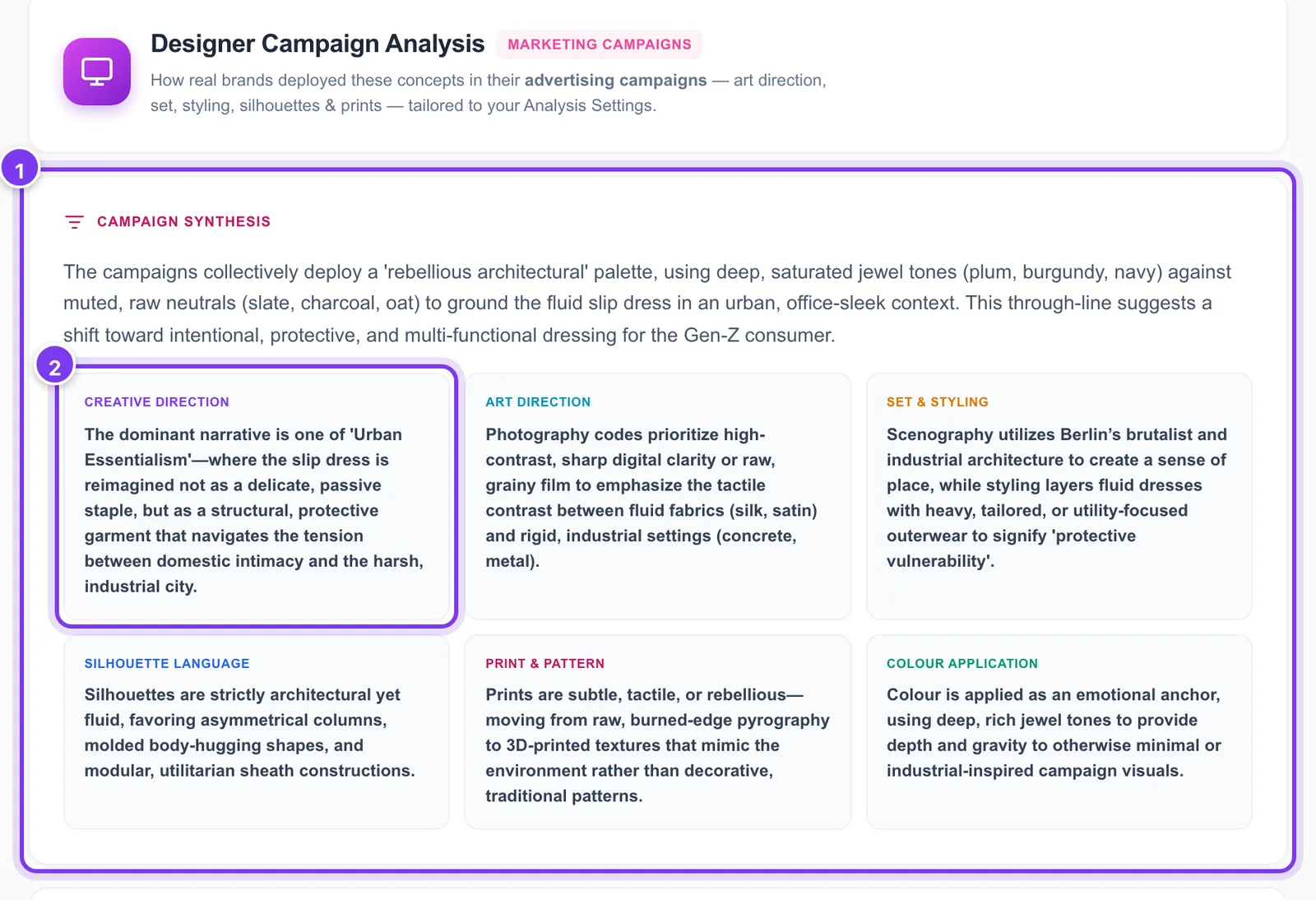
The Designer Campaign Analysis with its campaign synthesis paragraph and creative direction, art direction and set & styling panels. Designer campaigns opens with a synthesis across every campaign found for your scope: the palette they deploy, then creative direction, art direction, set and styling, silhouette language, print and pattern, and colour application.
- Campaign synthesis — what the campaigns collectively say, in one paragraph.
- Creative direction — the dominant narrative behind them.
Step 4: Study individual brand campaigns
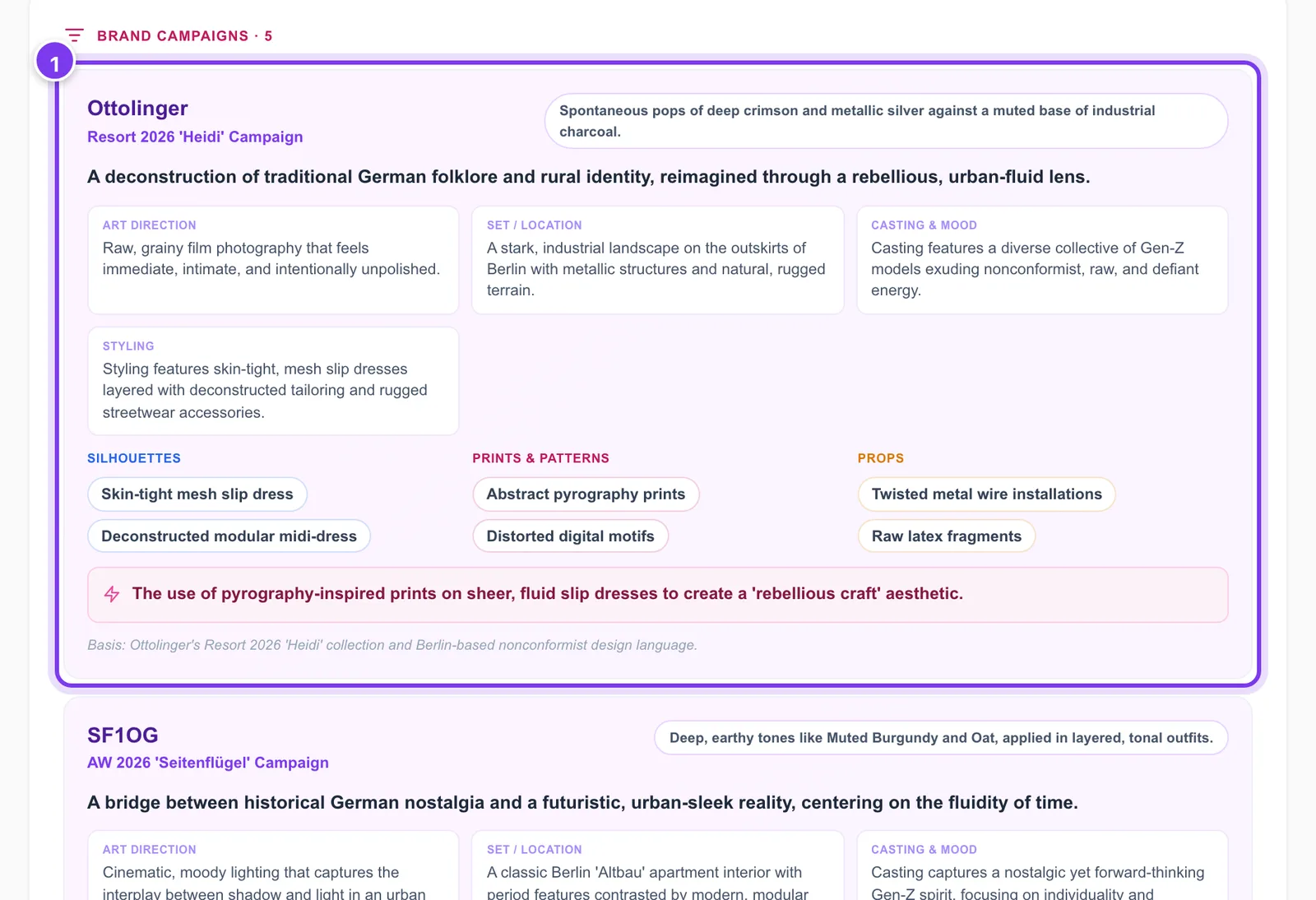
A brand campaign card broken down into art direction, set / location, casting & mood, styling, silhouettes, prints & patterns and props. Brand campaigns lists each campaign with its season and name, a palette note and a one-line concept, broken down into art direction, set and location, casting and mood, styling, silhouettes, prints and patterns, and props — ending with the single idea worth taking from it.
- Campaign card — the brand, the campaign and its concept.
- Art direction — how it was shot, alongside set, casting and styling.
What you have now
The stories pulling your consumer — with funded pushes told apart from organic ones — and how brands are already turning similar ideas into campaigns. Both feed the colour direction.
Frequently asked
Why does the campaign lane matter for colour?
Designer campaigns is one of the two required inputs to the colour direction, alongside the consumer map. How brands actually deploy colour in their advertising keeps the palette grounded in commercial reality.
Does a brand-backed narrative mean the trend is not real?
No — it means part of its momentum is paid for. F-Predict flags it so you can weigh organic consumer demand separately from a funded push.
Keep reading
How do I read material and catwalk intelligence in F-Predict?
Material intelligence shows which textiles the trade shows are pushing for your scope and why each is emerging — its demand drivers, the consumer it serves…
How do I build a colour direction in F-Predict?
Open the Colour direction tab once the consumer map and designer campaigns have run. F-Predict groups colours into themes, each tied to a consumer emotion…
What is trend acceleration?
Trend acceleration is the rate of change in a trend’s adoption — whether uptake is speeding up, holding steady or slowing down. It differs from popularity,…